


DTF vs Screen Printing: What You Actually Need to Know Before Choosing
- Archie Quevedo
- Mar 23
- 3 min read
If you're starting a clothing brand, running a merch business, or scaling production, choosing between Direct-to-Film (DTF) and screen printing isn’t just a technical decision — it’s a business decision.
At Campus Printing Solutions, we work with both startups and established brands daily, and one thing is clear:
The “best” method depends entirely on your volume, design complexity, and cash flow strategy.
Let’s break it down properly.
What is DTF Printing?

DTF (Direct-to-Film) printing involves printing your design onto a special film, applying adhesive powder, curing it, and then heat pressing it onto fabric.
Where DTF dominates:
Full-color, high-detail designs
Small batch production
Fast turnaround jobs
Advantages of DTF
1. No minimum order requirementYou can print 1 shirt or 100 — same process. Perfect for startups testing designs.
2. Handles complex artwork easilyGradients, shadows, multiple colors — no extra cost. This kills one of screen printing’s biggest weaknesses.
3. Faster setup timeNo screens. No long prep. You can go from design to print in minutes.
4. Versatile on materialsWorks on cotton, polyester, blends — no stress.
Disadvantages of DTF
1. Higher cost per unit (at scale) If you’re printing 100+ units of the same design, DTF becomes expensive fast.
2. Feel of the print (hand feel) DTF sits on top of the fabric. Compared to screen printing, it can feel heavier.
3. Durability (when done poorly) Bad DTF = cracking, peeling, or plasticky finish. This is where many cheap suppliers fail.
What is Screen Printing?
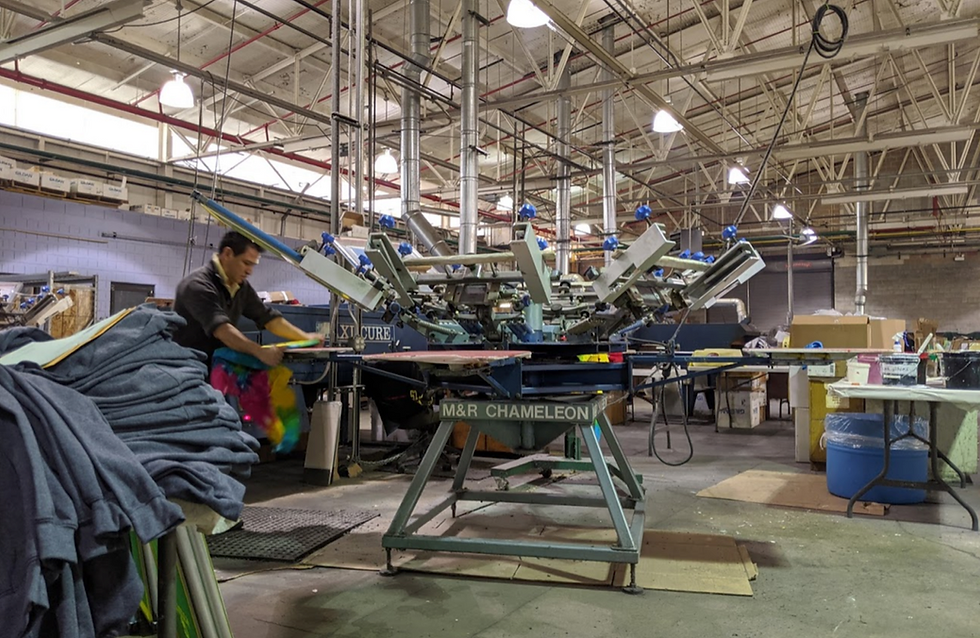
Screen printing pushes ink through a stencil (screen) directly onto the fabric, one color at a time.
Where screen printing dominates:
Bulk production
Simple designs
Premium finish
Advantages of Screen Printing
1. Lower cost per unit (at volume)Once setup is done, printing 50, 100, 500 units becomes very cheap.
This is where real margins are made.
2. Superior durabilityThe ink bonds into the fabric (especially plastisol or water-based). Prints last longer and age better.
3. Premium feelLighter, softer, more “retail-quality” finish.
4. Strong brand perceptionBig brands still rely heavily on screen printing for a reason.
Disadvantages of Screen Printing
1. High setup costEach color = new screen. Multi-color designs become expensive quickly.
2. Not ideal for small runsPrinting 10 shirts? You’re wasting money.
3. Longer turnaround timeSetup, alignment, drying — it all adds time.
4. Limited design flexibilityGradients and photo-real designs are difficult and costly.
The Brutal Truth Most Printers Won’t Tell You
Stop thinking this is a “DTF vs Screen Printing” war.
The real winners use both.
Here’s how smart businesses operate:
Scenario | Best Method |
1–30 units | DTF |
30–80 units | Depends (margin vs quality decision) |
80+ units | Screen Printing |
Complex artwork | DTF |
Simple 1–2 color logo | Screen Printing |
If you’re only offering one method, you’re leaving money on the table.
What This Means for Your Business
If you're a startup: Use DTF to validate designs quickly without risk.
If you're scaling: Transition winning designs into screen printing to maximize profit.
If you're serious about brand perception: Use screen printing for core products, DTF for limited drops.
Final Thought
There is no “best” printing method.
There is only: The right method for the right job.
At Campus Printing Solutions, we don’t just print — we help you choose the method that makes your business more efficient, more profitable, and more scalable.
Need Help Choosing the Right Method?
Whether you're launching your first drop or scaling production, we’ll guide you through the smartest printing strategy for your goals.
📩 Get in touch with Campus Printing Solutions today.


Comments